 I-COST

The Commercial Vulnerability of Tier-2 Subcontractors
Specialist subcontractors are the engine room of the UK construction industry, performing more than 80% of all physical building work. Yet, tier-2 and tier-3 trade contractors operating between £500k and £15m turnover occupy the most precarious commercial position in the supply chain.
Positioned between institutional main contractors using heavily amended standard-form subcontracts (such as JCT Design and Build Subcontract or NEC4 Subcontract) and material merchants demanding prompt 30-day settlement, specialist trades face continuous commercial pressure. Protecting your margin requires mastering contract mechanics, payment notices, and rigorous documentation.
Navigating the Construction Act Payment Framework
The Housing Grants, Construction and Regeneration Act 1996 (as amended by the Local Democracy, Economic Development and Construction Act 2011) provides statutory rights that cannot be overridden by onerous subcontract clauses:
- The Right to Interim Payments: Every construction contract lasting more than 45 days must provide an entitlement to staged interim payments.
- Payment Due Date & Final Date for Payment: The contract must set out clear timetables for when payment becomes due and the final date for payment.
- Payment Notices & Default Applications: If the main contractor fails to issue a Payment Notice within 5 days of the due date, your original Payment Application becomes the notified sum.
- Pay Less Notices: A main contractor cannot arbitrarily deduct money for alleged defects, delay contra-charges, or unsubstantiated damages unless they serve a compliant Pay Less Notice specifying the exact calculation basis before the contractual deadline.
Subcontract Commercial Defence Checklist
| Stage of Project | Key Commercial Risks | Mandatory Defence Actions |
|---|---|---|
| Pre-Contract & Award | Onerous "pay-when-paid" clauses; unfeasible design warranties; unlimited liability caps. | Strike out pay-when-certified clauses (illegal under the Act); negotiate liability caps; verify clear definition of attendances. |
| On-Site Delivery | Verbal variation instructions; delay caused by preceding trades; out-of-sequence working. | Issue Confirmations of Verbal Instructions (CAIs) within 24 hours; submit formal Early Warning / Delay notices immediately. |
| Monthly Valuations | Aggressive valuation cuts; delayed payment certification; unnotified deductions. | Submit detailed, measured payment applications with photos and delivery notes; check Pay Less Notice dates rigidly. |
| Practical Completion | Snagging disputes; retention withholding; delayed final account agreement. | Secure copy of the Main Contract Practical Completion Certificate; initiate 12-month retention release calendar. |
How to Handle Variation Disputes Professionally
When a main contractor attempts to reject variations at final account stage, the subcontractor who holds contemporaneous written evidence always prevails. Never rely on informal text messages or friendly agreements with site agents who may leave the project before final settlement.
Every variation should link to a defined request, record actual plant and labour hours incurred, reference agreed contract schedule rates, and be signed off in writing prior to execution.
Key Takeaways
- Protect Margin from Day One: Margin leakage occurs incrementally; establish committed cost controls before placing orders.
- Enforce Written Protocols: Verbal site requests carry 100% contractor risk. Require written confirmations of verbal instructions (CAIs) immediately.
- Bridge the Estimating-Buying Gap: Ensure the tender estimate baseline directly governs purchase order authorization and live project tracking.
Explore how I-Cost supports construction commercial management
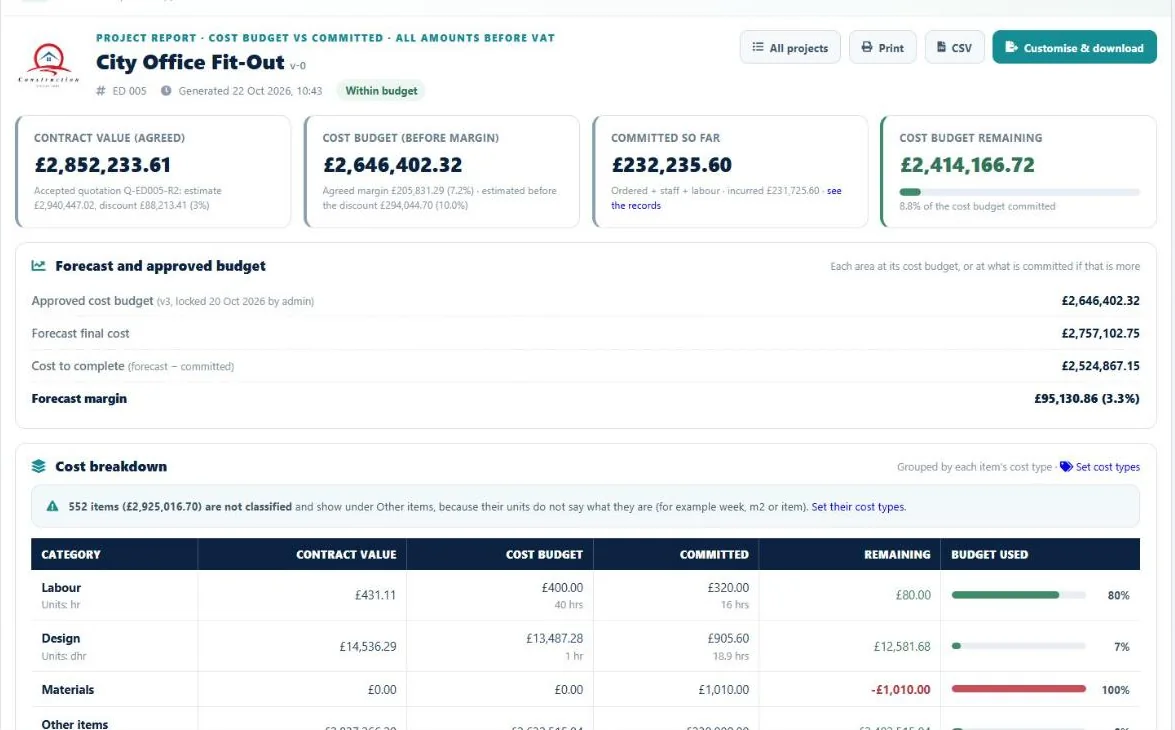
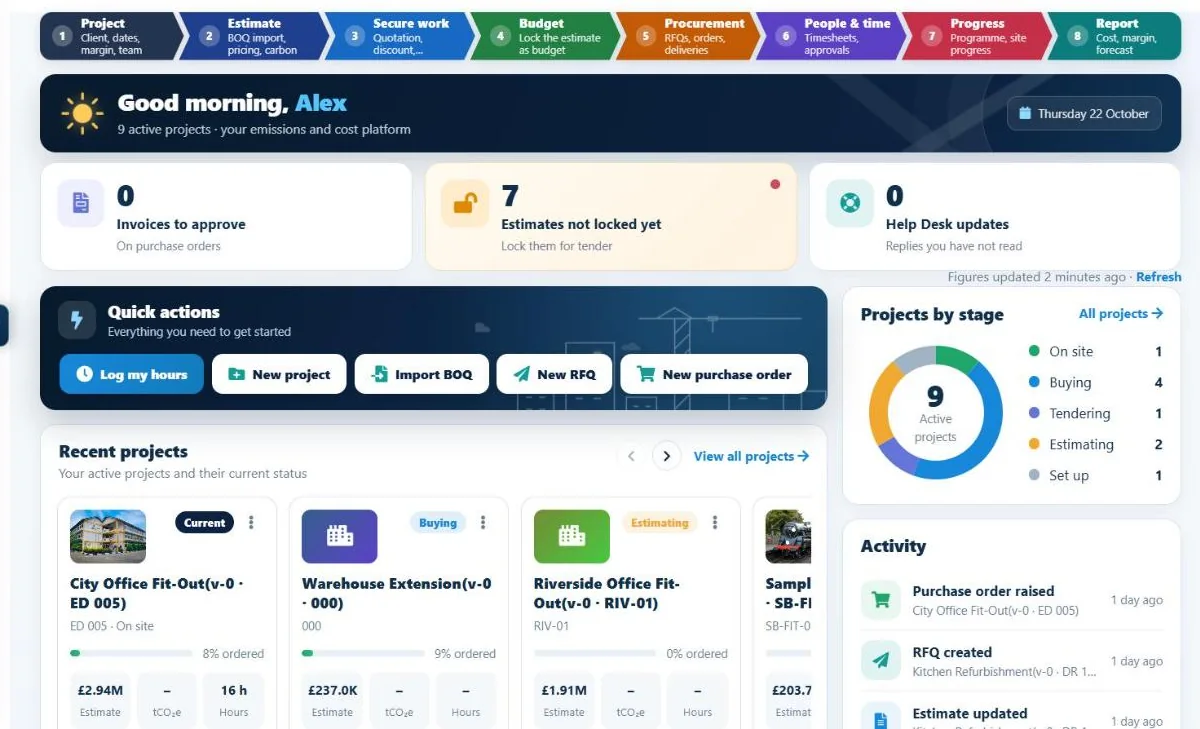
I-Cost brings your client's BOQ, estimate, supplier quotations, purchase orders, mobile site timesheets, and whole life carbon into one connected system for UK contractors, calculating live forecast margin from day one.
Frequently Asked Questions
What is a Pay Less Notice under UK construction law?
Under the Housing Grants, Construction and Regeneration Act 1996 (as amended 2011), a paying party who intends to pay less than the notified sum must issue a formal Pay Less Notice specifying the basis of calculation and reasons for withholding money, typically at least 5 to 7 days before the final date for payment.
Can a main contractor withhold payment without a Pay Less Notice?
No. If the paying party fails to issue a valid Payment Notice or Pay Less Notice within the statutory timeframes, the notified sum in the subcontractor's payment application becomes the legally payable sum in full.
What is the best way to ensure retention is returned on time?
Issue an automated tracking notice when the Practical Completion certificate is issued, establish the exact expiry date of the Rectification/Defects Liability Period, and formally apply for the second retention moiety immediately with the Certificate of Making Good Defects attached.