 I-COST
The invoice is a late signal
A project manager approves three purchase orders on Monday. By Friday the buying allowance has been exceeded, although the accounts ledger shows no supplier invoices. The financial exposure arose when the orders were committed, not when the supplier's paperwork reached accounts.
Construction committed cost tracking makes that exposure visible early enough to act. It is especially useful when materials are ordered weeks before delivery or specialist subcontract packages are agreed before their first valuation. A report based only on invoices can show apparent headroom that has already been spent.
Define the four figures before comparing them
| Figure | Meaning in this guide |
|---|---|
| Approved budget | The authorised cost allowance for the agreed scope, retained as a comparison baseline. |
| Committed cost | Exposure already incurred or contractually committed. Report definitions vary; identify whether the figure includes actuals. |
| Actual cost | Cost recognised to date under the chosen accounting basis, including relevant accruals rather than cash alone. |
| Forecast final cost | The current estimate of the total cost to complete the full scope, including remaining work and assessed risks. |
For the worked example below, “outstanding commitments” means the uninvoiced balance of approved orders. Actual invoices and outstanding commitments are shown separately to prevent double counting. Check how your own report treats deliveries, accruals, credit notes and labour before using the same formula.
How orders consume the budget
A purchase order can commit money before delivery or invoicing, depending on its acceptance and terms. Draft or unapproved orders should be distinguished from approved commitments. Keep cancellation rights and provisional quantities visible rather than treating every draft request as a final liability.
At approval, allocate the order to a project and cost code and compare it with the remaining package allowance. Include delivery, plant, waste and associated work where relevant. An order for the main material may leave an unfunded requirement for fixings, lifting or installation.
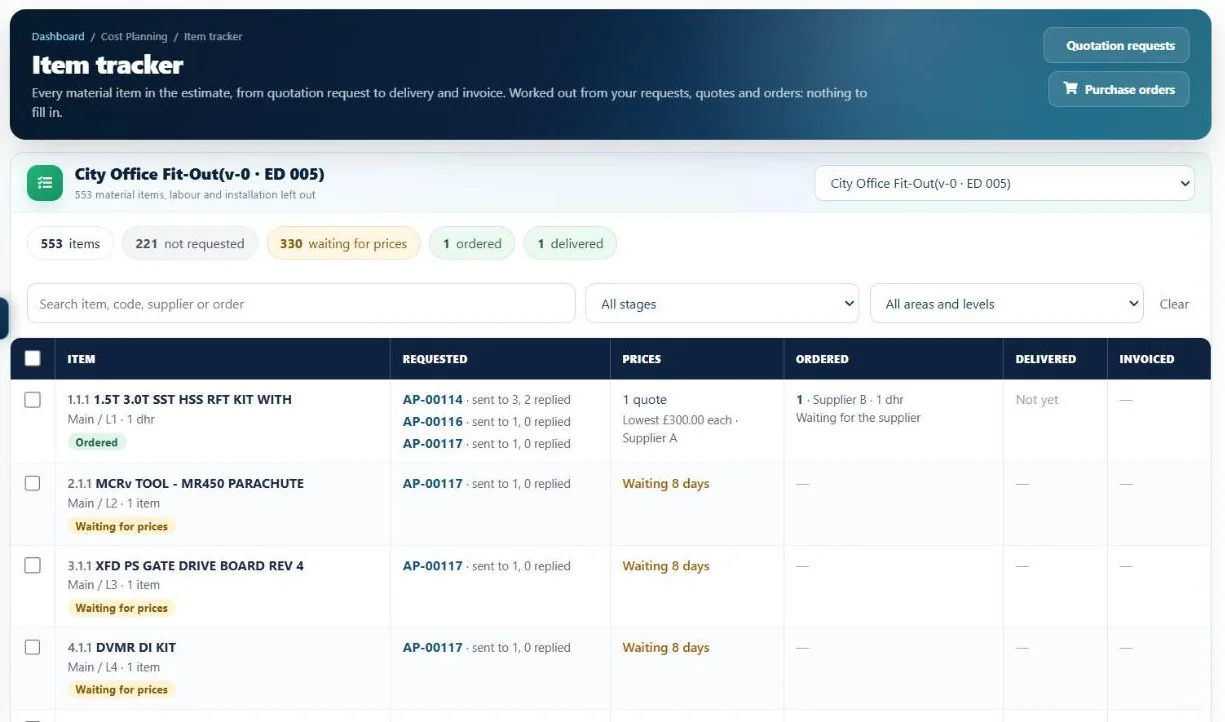
The RFQ and purchase order guide explains the distinction between seeking a price and placing an order. An unanswered quotation request should not quietly become an assumed fixed-price commitment in the forecast.
Worked example: a £100,000 package budget
All figures below are illustrative and exclude VAT. A subcontractor has a £100,000 approved package budget. Approved orders total £78,000. Invoices of £20,000 relate entirely to those orders, leaving £58,000 outstanding. The team also expects £26,000 of work and materials that have not yet been ordered.
| Component | Amount |
|---|---|
| Actual invoices on approved orders | £20,000 |
| Outstanding balance of those orders | £58,000 |
| Uncommitted remaining work | £26,000 |
| Forecast final cost | £104,000 |
| Forecast overrun against £100,000 budget | £4,000 |
The forecast is £20,000 + £58,000 + £26,000 = £104,000. Adding the £20,000 invoices to the full £78,000 order total and the £26,000 remainder would produce £124,000 and count the invoiced portion twice.
Before the first invoice arrived, the same £78,000 of orders plus £26,000 remaining work already indicated the £4,000 problem. Invoice timing changes the split between actual and outstanding cost; it does not create a new £20,000 of project exposure.
What changes after delivery?
If goods worth £8,000 arrive but are not invoiced at the reporting date, the accounting review may require a goods-received accrual. Make sure the commitment reconciliation reflects that recognition so the £8,000 is not also counted as additional remaining exposure. Agree the treatment with finance.
Cash paid is another measure. Paying an invoice reduces cash and the payable balance, but does not make the work cost disappear. Keep the cash-flow forecast separate from the estimate of total delivery cost.
Supplier changes and variations need explicit treatment
Assume an approved scope change adds £3,000 and a confirmed order revision adds £2,000, neither already included in the original forecast. The revised forecast is £109,000. Retain the original £100,000 baseline and show the reason for each movement rather than silently increasing the budget.
If an authorised budget transfer or client variation changes the approved baseline, record its approval separately. A supplier's additional charge does not automatically establish a matching customer entitlement. Assess the likely cost and revenue effects independently and keep pending claims visible.
For unplaced items, refresh prices before quotation expiry and document any allowance for uncertainty. Do not add a general contingency again if the same risk is already included in a specific remaining-work allowance. The forecast final cost guide provides the wider forecasting context.
A review that leads to action
- Reconcile approved orders to invoices, credits, cancellations and remaining balances.
- Check receipts and accruals with finance at the reporting cut-off.
- Ask the site team what is still required to complete every package.
- Update labour hours and productivity assumptions against the remaining quantities.
- Record approved and pending variations with a cost owner and next action.
- Compare forecast with the retained budget and investigate the largest movements.
Keep the cut-off date consistent. A report mixing last month's labour, today's orders and an old remaining-work estimate can look precise while describing no single point in time. Put the source date and review owner beside each material assumption.
How the documented I-Cost workflow fits
The local purchase order page and platform cost-control section describe orders, deliveries, invoices, accruals and the locked estimate budget. They also describe committed costs, forecast final cost and drill-down to underlying records.
Those connections can support purchase order cost control. The commercial team must still check completeness, coding, scope and remaining work. Do not assume a software-generated forecast automatically captures every unapproved change or productivity risk; reconcile the report's definition with your review process.
Practical takeaway
At the next cost meeting, ask for three reconciled numbers per package: actual cost, outstanding commitments and uncommitted cost to complete. Compare their combined forecast with the approved budget. Resolve differences before approving the next order, while procurement choices and scope decisions can still influence the outcome.
See commitments alongside the approved budget
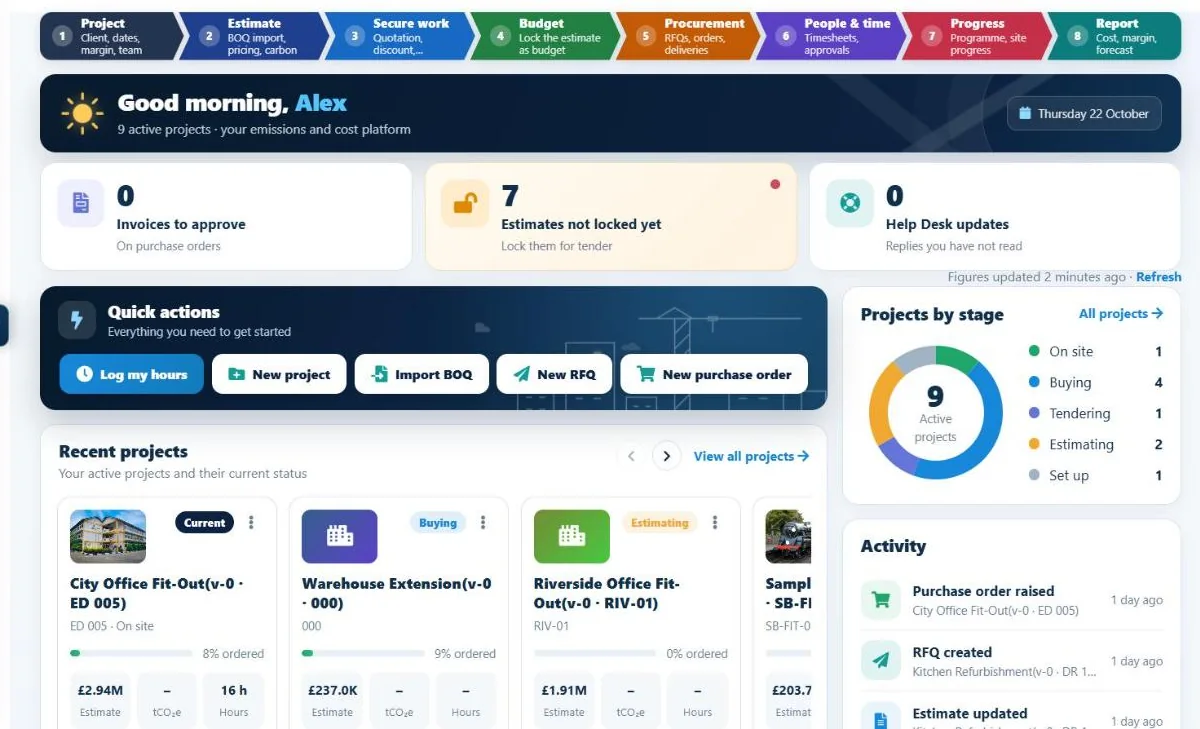
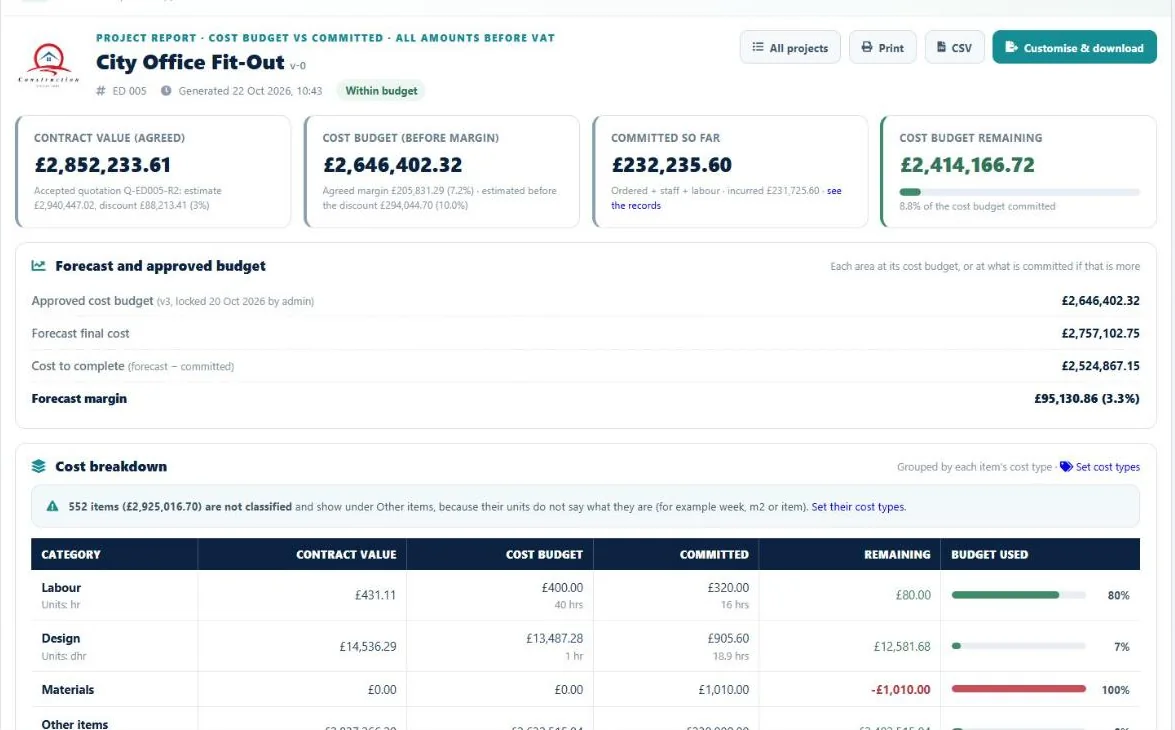
I-Cost’s documented cost report connects the locked estimate budget with orders, invoices, staff and site labour, and forecast margin. Use the records behind each total to review changes and remaining exposure.
Frequently asked questions
Are committed costs the same as invoices?
No. Orders and other commitments can create exposure before invoices arrive. Some reports use committed cost to include actuals, so confirm the definition.
How do I avoid double counting orders and invoices?
Separate actual cost from the outstanding uninvoiced balance of the same orders. Do not add invoices to a full order value that already includes them.
Can a job be over budget before the first invoice?
Yes. Approved commitments plus the realistic cost of remaining work can exceed the budget even when the invoice ledger is empty.
Should an unapproved client variation increase the budget?
Keep pending cost and revenue assessments visible, but change an approved budget only through the agreed authorisation process.