 I-COST
The Cost of Fragmented Construction Systems
In many UK construction businesses, commercial data exists in isolated islands. The estimator builds the tender on a complex Excel spreadsheet saved on their local computer. When the project is awarded, the buying team receives a printed PDF summary or a generic budget and begins contacting merchants from scratch. Meanwhile, site supervisors record operative hours on paper timecards, and the finance department processes invoices on separate accounting packages.
This disconnected workflow creates friction, delays, and margin erosion. When the buyer does not know the exact rate the estimator allowed, or when the site agent orders items without referencing the purchase order schedule, profit leaks away unnoticed.
The Connected Commercial Lifecycle
Modern digital construction platforms eliminate these silos by establishing a unified, continuous data thread across the entire project lifecycle:
| Project Stage | Traditional Fragmented Approach | Connected Digital Workflow | Commercial Benefit |
|---|---|---|---|
| 1. Tender Takeoff & BOQ | Client BOQ retyped into Excel; rates pulled from obsolete spreadsheets. | Direct Excel/BIM BOQ import; rates dynamically checked against recent supplier orders. | 70% faster tender preparation; zero transcription errors. |
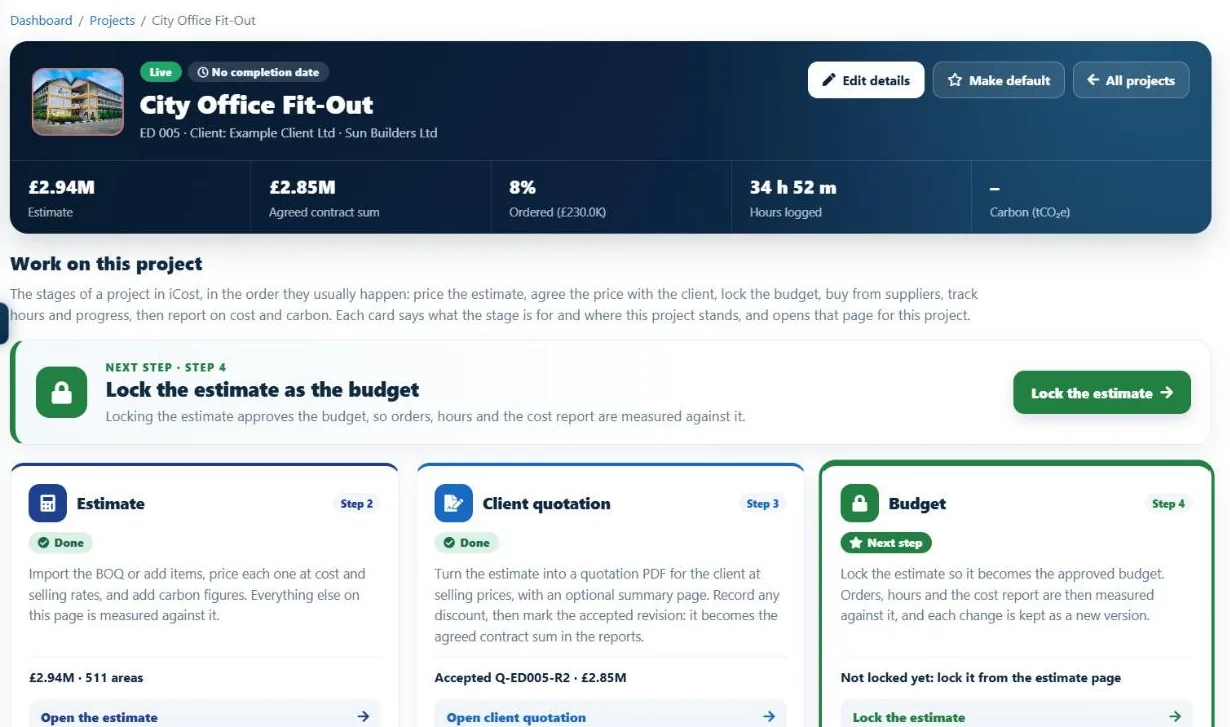
| 2. Tender Handover | Estimating files archived; buyer creates separate purchasing lists manually. | Won estimate automatically becomes the live project budget and item procurement schedule. | Instant procurement handover without data re-entry. |
| 3. Supplier Procurement | Inquiries emailed individually; quotes compared on manual scratchpads. | Digital RFQ requests sent to pre-selected suppliers; side-by-side like-for-like comparison matrix. | Uncovers hidden delivery surcharges; locks best market rates. |
| 4. Order Commitment | Verbal or basic email orders placed without budget cross-referencing. | Purchase orders generated directly from approved quote with mandatory budget ceilings. | Records committed cost immediately; prevents over-ordering. |
| 5. Site Receipt & Hours | Paper delivery notes filed in site cabin; paper timesheets filled out on Friday. | QR delivery notes scanned via mobile; daily digital timesheets logged per cost code. | Enforces 3-way matching; stops invoice overcharging and timesheet inflation. |
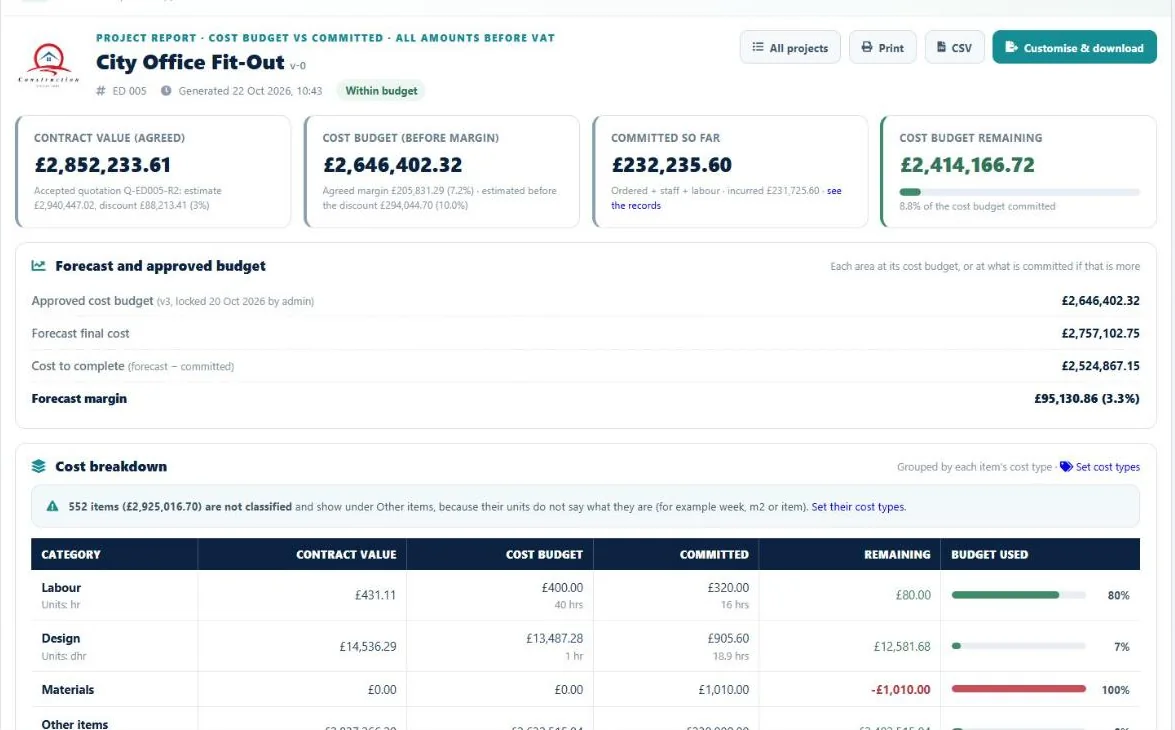
| 6. Commercial Reporting | Month-end CVR built from retrospective ledger data weeks after period close. | Live forecast margin and CVR updated continuously as orders, deliveries, and hours occur. | Identifies margin slippage in week 3 rather than month 6. |
Why Connected Workflows Are Essential for UK SMEs
Specialist trade subcontractors and regional main contractors with turnovers between £500k and £15m operate on tight operating margins—often between 2% and 6%. In this high-stakes environment, an operational disconnect of 3% across material and labour spend is the difference between healthy business profitability and insolvency.
By connecting estimating directly with procurement, site delivery verification, and cost reporting in a single intuitive platform, contractors gain the commercial command required to protect every pound of margin won at tender.
Key Takeaways
- Protect Margin from Day One: Margin leakage occurs incrementally; establish committed cost controls before placing orders.
- Enforce Written Protocols: Verbal site requests carry 100% contractor risk. Require written confirmations of verbal instructions (CAIs) immediately.
- Bridge the Estimating-Buying Gap: Ensure the tender estimate baseline directly governs purchase order authorization and live project tracking.
Explore how I-Cost supports construction commercial management
I-Cost brings your client's BOQ, estimate, supplier quotations, purchase orders, mobile site timesheets, and whole life carbon into one connected system for UK contractors, calculating live forecast margin from day one.
Frequently Asked Questions
What is the 'commercial silo' in construction contracting?
The commercial silo refers to the operational disconnect where estimators price jobs on standalone spreadsheets, buyers procure materials on separate systems, site teams record hours on paper, and finance reconciles accounts retrospectively, preventing real-time cost visibility.
How does an item tracker bridge estimating and site operations?
An item tracker takes the quantities and descriptions priced in the tender estimate and tracks them through every operational phase: RFQ, supplier quote comparison, purchase order, goods received note, and invoice certification.
Do contractors need complex enterprise ERPs to achieve connected workflows?
No. Modern cloud-native platforms like I-Cost deliver end-to-end commercial integration from BOQ import to purchasing and margin forecasting at a fraction of the complexity and cost of legacy tier-1 ERP systems.